The Role of the Rotor in a Screw Pump
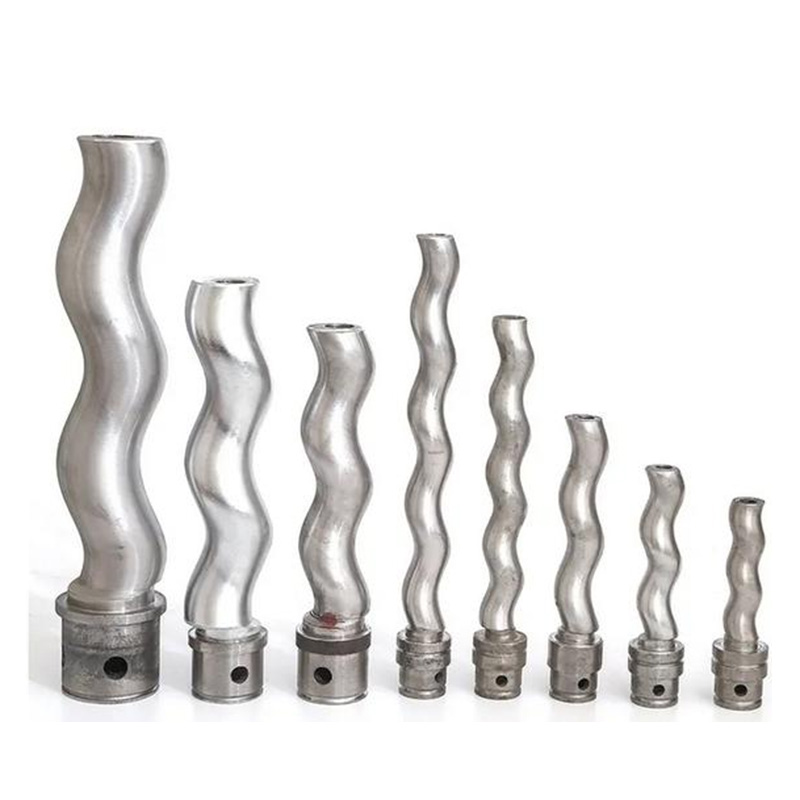
The rotor is the central working component of a screw pump, directly responsible for creating the mechanical action that moves fluid through the pump. In a progressive cavity pump — the most widely used type of screw pump in industrial and process applications — the rotor is a precisely machined helical metal shaft that rotates eccentrically inside a resilient elastomeric stator. As the rotor turns, it creates a continuous series of sealed cavities between its outer surface and the inner bore of the stator. These cavities form at the inlet, advance axially toward the outlet, and collapse as they reach the discharge end, displacing fluid progressively and uniformly with each revolution. This action gives the progressive cavity pump its name and gives the rotor its fundamental importance: without a correctly designed and properly maintained rotor, the pump cannot generate the cavity geometry necessary to move fluid at all.
In two-screw and three-screw pump configurations — used primarily in hydraulic systems, fuel transfer, and lubrication oil circuits — the rotors are intermeshing screw-profiled shafts that trap fluid between their threads and the pump casing as they rotate. In these designs, the precision of the rotor tooth profile and the clearance between meshing rotors determines both the pump's volumetric efficiency and its maximum operating pressure. Across all screw pump types, the rotor is the component that defines pumping performance, and its geometry, material, surface finish, and condition are all directly linked to output quality and operational reliability.
Rotor Geometry and Its Effect on Pump Performance
The geometry of a screw pump rotor is not arbitrary — it is the product of precise engineering calculations that must balance several competing performance requirements. For progressive cavity pump rotors, the key geometric parameters are the rotor pitch, the eccentricity, the helix angle, and the rotor diameter. Together these parameters define the size and shape of the cavities that form between the rotor and stator, and therefore determine the pump's displacement per revolution, maximum flow rate, and pressure-generating capability.
The rotor pitch — the axial distance for one complete helical revolution — is directly related to the stator pitch, which is always twice the rotor pitch in a single-lobe rotor/double-lobe stator configuration. A longer pitch produces larger cavities and higher flow rate per revolution, but also increases the axial length of the pump for a given number of stages. The eccentricity, which is the offset between the rotor's geometric center and its axis of rotation, determines the cross-sectional shape of the cavity and has a major influence on the contact pressure between rotor and stator. Higher eccentricity creates larger cavities but also increases the mechanical stress on both the rotor and stator during operation, particularly during dry running or when pumping abrasive slurries.
Multi-stage rotor designs — where the helical profile repeats over two or more pitch lengths within a single rotor — are used when higher discharge pressures are required. Each additional stage adds one more sealed cavity in series, increasing the pressure differential the pump can sustain while maintaining the same flow rate. Two-stage rotors are common in applications requiring pressures up to 24 bar, and four-stage or six-stage designs are available for high-pressure duties in oil production and dewatering applications.
Materials Used for Screw Pump Rotors
The material selected for a screw pump rotor must withstand the mechanical stresses of rotation and eccentric motion, resist wear and corrosion from the pumped fluid, and maintain dimensional accuracy over long service intervals. Material selection is therefore one of the most critical decisions in rotor specification, and it must be tailored to the specific application conditions.
Carbon Steel and Alloy Steel
Standard carbon steel rotors, often manufactured from grades such as C45 or equivalent, are the baseline choice for non-corrosive applications where the pumped fluid provides adequate lubrication. They offer good machinability and cost-effectiveness but have limited corrosion resistance. Alloy steel rotors, incorporating chromium, molybdenum, or nickel additions, provide improved mechanical strength, hardness, and some corrosion resistance, making them suitable for more demanding industrial duties including high-pressure stages and abrasive slurry applications.
Hard Chrome Plated Rotors
Hard chrome plating applied over a steel substrate is one of the most widely used surface treatments for progressive cavity pump rotors. The chrome layer — typically 0.05 to 0.1 mm thick — provides a very hard surface (900–1000 HV) that resists abrasive wear from suspended solids in the pumped fluid, reduces the coefficient of friction at the rotor-stator interface, and offers moderate corrosion resistance in mildly aggressive media. Hard chrome plated rotors are the standard choice in wastewater treatment, food processing slurries, and general industrial applications where moderate abrasion resistance is needed without excessive material cost.
Stainless Steel Rotors
Stainless steel rotors — most commonly manufactured from 316L or duplex grades — are specified for applications where corrosion resistance is a primary requirement. These include chemical process pumps handling acids, alkalis, or chloride-containing solutions, food and beverage processing where hygiene standards prohibit the use of chrome plating, and pharmaceutical manufacturing where material traceability and compliance with FDA or EHEDG standards are mandatory. Duplex stainless steel grades offer higher strength and better pitting corrosion resistance than standard austenitic grades, making them preferable in aggressive marine or chemical environments.
Tungsten Carbide and Thermal Spray Coated Rotors
For highly abrasive applications — such as pumping ceramic slurries, drilling muds, mine tailings, or sand-laden produced water in oil and gas operations — tungsten carbide coatings applied by high-velocity oxyfuel (HVOF) thermal spray provide exceptional wear resistance far beyond that achievable with hard chrome. Tungsten carbide coated rotors can extend service intervals by a factor of five or more compared to standard chrome-plated rotors in severe abrasive duty, significantly reducing maintenance costs and downtime despite their higher initial price.
Common Rotor Wear Mechanisms and Failure Modes
Understanding how and why screw pump rotors wear or fail is essential for designing effective maintenance programs and specifying the correct replacement components. The dominant failure modes vary with application type, but several are consistently encountered across industries.
| Failure Mode |
Primary Cause |
Observable Symptom |
Recommended Action |
| Abrasive wear |
Hard particles in pumped fluid |
Reduced flow, increased slip |
Upgrade to HVOF-coated rotor |
| Corrosion pitting |
Aggressive chemical media |
Surface pitting, coating loss |
Switch to stainless or duplex grade |
| Fatigue cracking |
Cyclic bending stress, overload |
Visible cracks, shaft fracture |
Check operating pressure and alignment |
| Dry run damage |
Running without fluid lubrication |
Scoring, stator destruction |
Install dry-run protection sensor |
| Chrome delamination |
Poor plating adhesion, impact |
Flaking, rough surface texture |
Replace rotor, review plating spec |
Abrasive wear is by far the most common rotor failure mode in applications involving slurries, sludge, or particle-laden fluids. As the rotor surface wears, the interference fit between rotor and stator decreases, allowing increasing amounts of fluid to slip backward from the high-pressure discharge side to the low-pressure inlet. This slip manifests as a gradual reduction in flow rate and pump efficiency, which progresses until the pump can no longer meet process requirements and replacement becomes unavoidable.
Rotor and Stator Fit: Understanding Interference and Its Implications
The performance of a progressive cavity pump is critically dependent on the interference fit between the rotor and the elastomeric stator — the slight dimensional interference that ensures the sealing contact necessary for cavity formation and pressure generation. This interference is engineered into the rotor-stator pair at the design stage and is expressed as the difference between the stator's internal bore dimensions and the rotor's outer profile dimensions.
Too little interference results in inadequate sealing, high internal slip, and poor efficiency — particularly at elevated temperatures where the stator elastomer softens and expands. Too much interference creates excessive contact pressure and friction at the rotor-stator interface, leading to accelerated stator wear, increased drive torque requirements, overheating, and premature failure of both components. The correct interference level depends on the stator elastomer compound, the pumped fluid's lubricating properties, the operating temperature, and the required pressure differential.
When replacing a worn rotor, it is essential to evaluate the condition of the stator simultaneously. A new rotor installed against a worn stator will have insufficient interference in the worn zones and will deliver poor performance despite the new component cost. In most maintenance scenarios, replacing the rotor and stator as a matched pair is the most cost-effective approach for restoring full pump performance.
Selecting the Right Rotor for Your Application
Specifying the correct screw pump rotor requires a systematic evaluation of the application's demands across several key parameters. Using a generic or mismatched rotor may result in premature failure, poor pump performance, or avoidable maintenance costs.
- Fluid abrasivity: Assess the concentration, hardness, and particle size of solids in the pumped medium. For fluids with high sand or grit content, specify HVOF tungsten carbide coated rotors. For moderately abrasive applications, hard chrome plating provides a cost-effective solution.
- Chemical compatibility: Identify the chemical composition of the pumped fluid, including pH, oxidizing agents, chloride content, and solvent constituents. Select rotor material and surface treatment that are confirmed compatible with the specific fluid chemistry through published resistance data or field experience.
- Operating pressure and number of stages: Confirm the required discharge pressure and select the appropriate number of rotor stages to achieve it within the pump's mechanical limits. Over-staging increases rotor bending moments and drive torque requirements unnecessarily.
- Temperature range: High fluid temperatures reduce elastomer stiffness in the stator, which effectively increases rotor-stator interference and drive torque. For high-temperature applications, the rotor geometry may need to be specified with reduced interference to compensate.
- Hygienic requirements: For food, beverage, and pharmaceutical applications, specify electropolished stainless steel rotors with surface roughness Ra ≤ 0.8 µm and confirm compliance with applicable hygienic design standards such as EHEDG or 3-A Sanitary Standards.
- OEM vs. aftermarket sourcing: Original equipment manufacturer (OEM) rotors are manufactured to the precise dimensional tolerances of the original pump design and are the safest choice for maintaining performance guarantees. High-quality aftermarket rotors can provide cost savings on replacement parts but must be verified to meet the same dimensional and material specifications as the OEM component before installation.
Maintenance Practices to Extend Rotor Service Life
Proactive maintenance is the most reliable and cost-effective strategy for maximizing screw pump rotor service life and minimizing unplanned downtime. Several specific practices have a proven impact on rotor longevity across all application types.
- Install dry-run protection: Dry running — even for a few seconds — can cause severe and irreversible damage to both the rotor surface and the stator elastomer due to the absence of fluid lubrication at the contact interface. Flow sensors, pressure switches, or level switches should be integrated into the pump's control system to shut down the pump automatically before the inlet runs dry.
- Monitor flow rate and efficiency trends: Tracking pump flow rate against speed over time provides early warning of increasing rotor-stator slip due to wear. A gradual decline in volumetric efficiency indicates that the rotor and stator are approaching end of life and allows planned replacement before catastrophic failure occurs.
- Inspect rotor surface at each maintenance interval: During scheduled maintenance, the rotor should be removed and its entire surface inspected for wear, corrosion, coating delamination, cracks, and dimensional changes using calibrated measuring tools. Any rotor showing localized wear exceeding the manufacturer's tolerance should be replaced rather than returned to service.
- Control operating speed within recommended limits: Exceeding the manufacturer's maximum recommended rotor speed increases frictional heating at the rotor-stator interface, accelerates elastomer degradation in the stator, and increases the risk of rotor fatigue failure. Variable frequency drives should be set with appropriate speed limiters and soft-start ramp rates to protect the rotor during startup.
- Flush the pump before shutdown when handling setting or crystallizing fluids: When pumping fluids that can harden, set, or crystallize on standing — such as cement slurries, lime solutions, or certain food products — flushing the pump with clean water before shutdown prevents the rotor from becoming locked in the stator by solidified product, which would cause shaft damage or stator tearing on the next startup.
The screw pump rotor is far more than a simple rotating shaft — it is a precision-engineered component whose geometry, material, surface condition, and fit with the stator collectively determine whether the pump delivers the performance its application demands. Investing in the right rotor specification from the outset, combined with disciplined condition monitoring and proactive maintenance, is the most reliable path to low total cost of ownership and consistent pumping system reliability across the full service life of the equipment.


 en
en  русский
 Español
 +86-18052670932
 +86-0523-84326888
 No. 35, Xinqiao Middle Road, Xinqiao Town, Jingjiang City, Jiangsu Province, China